
The Typewriter of Unlearning

I’ve always loved letter writing, the ritual of pen on paper, the soft scratch of ink forming words. So when my family gifted me a refurbished antique typewriter for my birthday in 2018, I felt I’d received more than a tool: I’d been entrusted with a new language of release.
Every key click, every carriage return, every imperfection made visible became a small act of courage.
Jacques Derrida’s concept of arche-writing teaches us that in writing, there is no pure origin: only traces of what came before.
On a typewriter, mistakes don’t vanish at the tap of a backspace. They linger as strikethroughs, blobs of white-out, or the echo of a mismatched character. These “errors” become part of the text’s history, a palimpsest of intention, revision, and humanity.
Unlearning our internal scripts works the same way. We cannot simply delete a lifetime of habits: people-pleasing, perfectionism, self-doubt. Instead, we cross them out, we acknowledge them, and we let their traces remain so that we can see how far we’ve come.
At the exhibition, I set the typewriter on a table with the prompt:
“If I could unlearn one thing, what would it be?”
Visitors leaned in and revealed an ocean of unlearning:
“the pursuit of perfection”
“people-pleasing”
“heirarchies”
“bottling up my emotions”
“comparison”
“the fear of the uncertain”
“what I have been socially conditioned to fear”
“body dysmorphia”
“log kya kahenge”
“attachment issues”
“abandoning my own needs”
and the list went on…
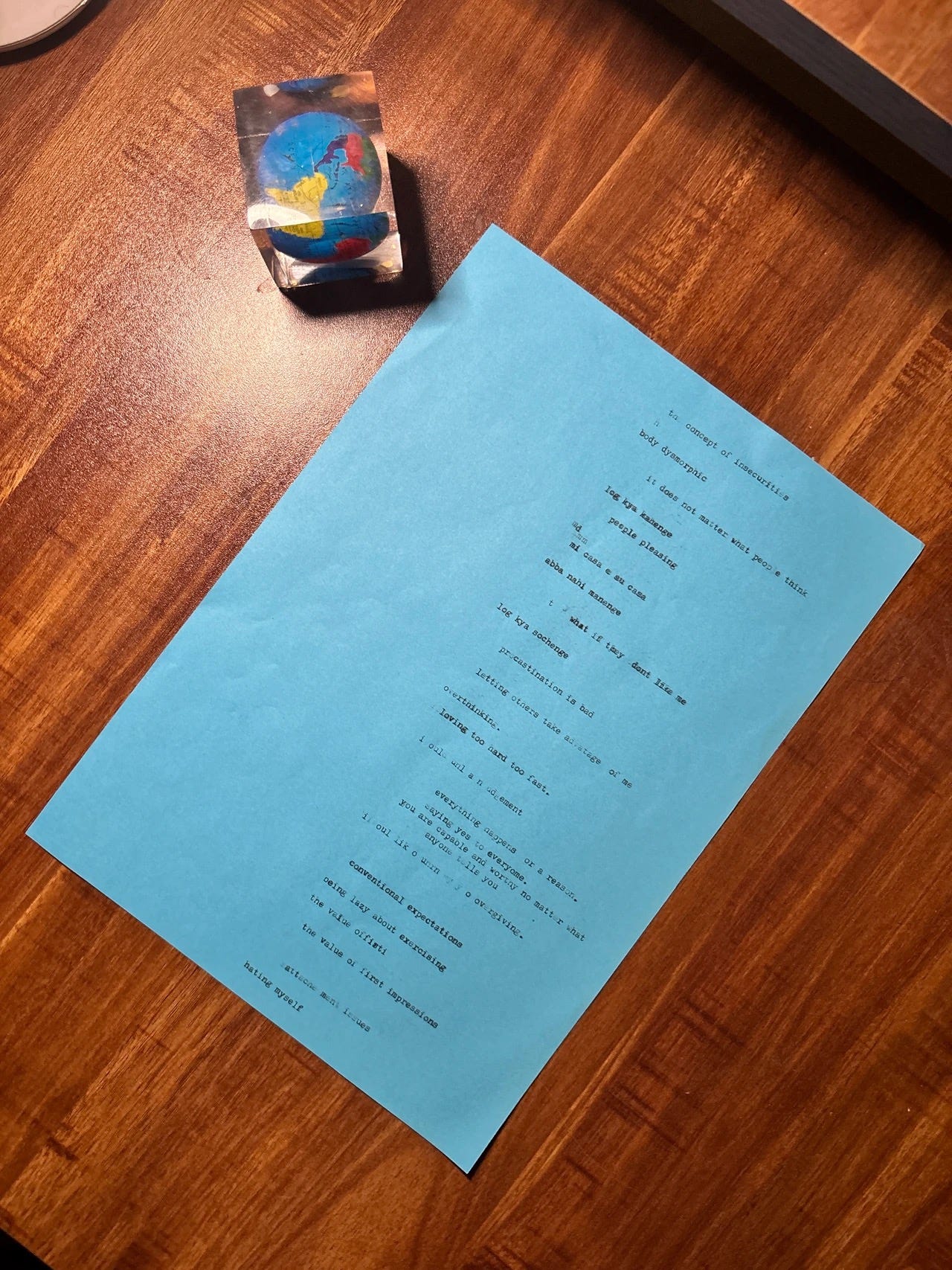
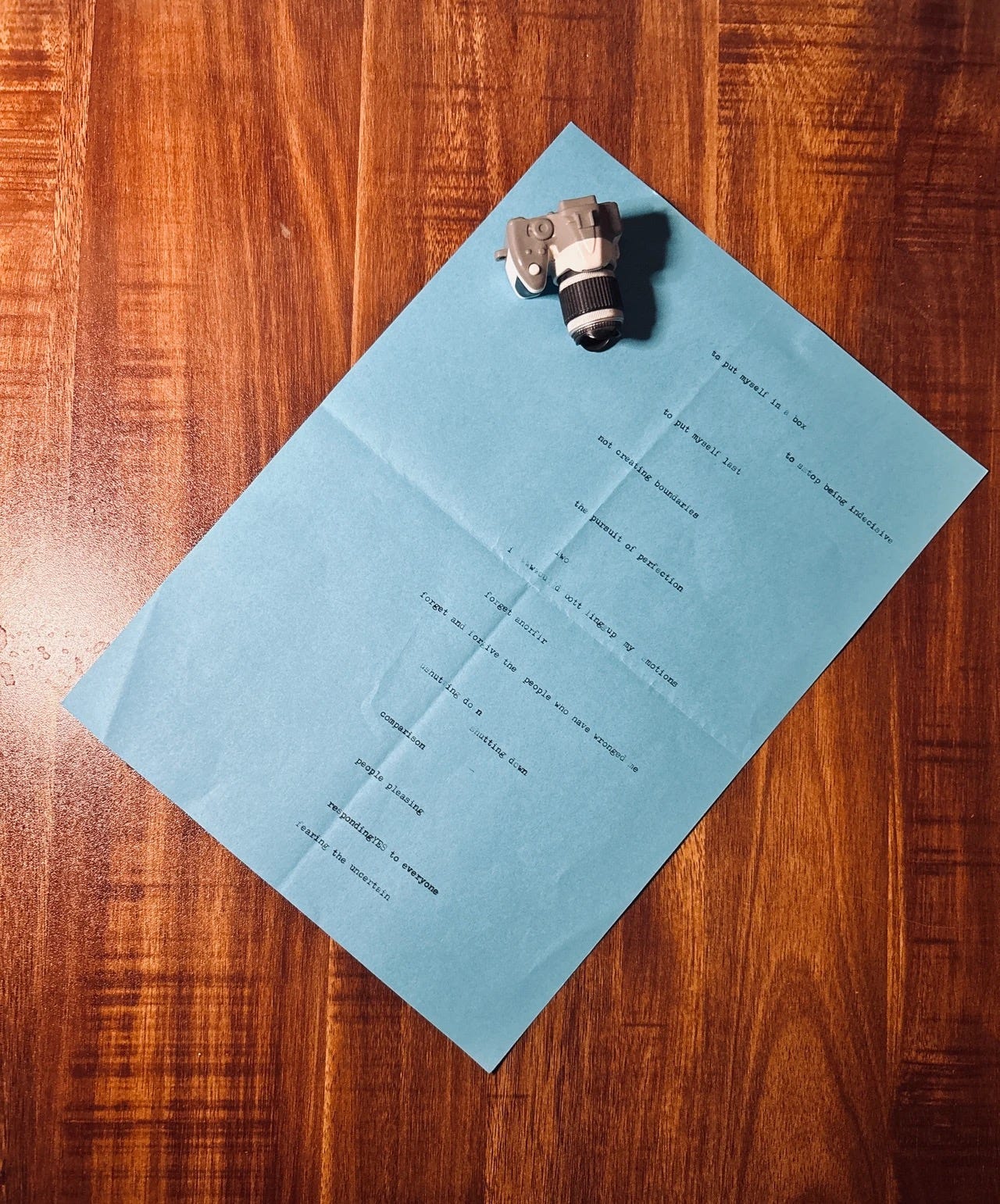
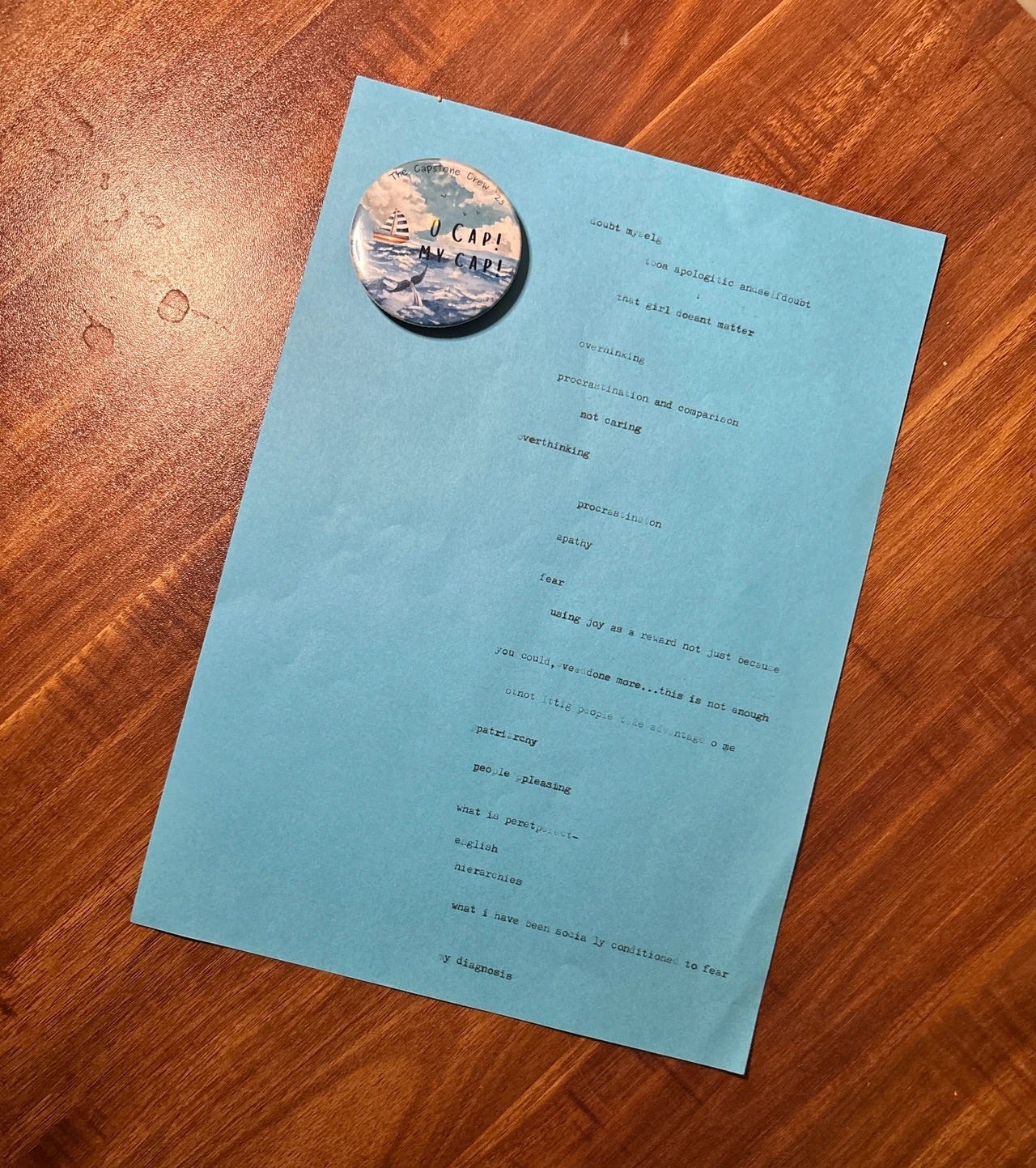
Each confession scrolled into a shared archive of vulnerability. None were erased. All were witnessed.
By marking our mistakes on paper, we transform errors into evidence. We resist the erasure of our past selves and the silencing of our needs. Each crossed-out phrase is a declaration: “I see this part of me, and I choose to move beyond it.”
Cooking buried questions into the page, letting them accumulate, uncorrected, became a communal ritual in unlearning. It was care in action, an embodied refusal of perfectionism and silence.
This typewriter, gifted, refurbished, alive with history, reminds me that to unlearn is not to forget, but to trace new patterns over old scripts. It reminds me that our growth is written in the white-out lines as much as the typed words.
What if you let your mistakes stay visible?What if unlearning meant writing over your fears instead of deleting them?
The typewriter of unlearning holds space for every scratched-out fear and every emerging sentence of possibility.
It is an invitation to keep typing, errors and all, until we reshape our archive of selfhood into something unbound.
Derrida, J. (1978). Writing and difference. University of Chicago Press.
🤍💯